Uncover the transformative potential of rapid meditation methods to lead a worry-free life. Begin with basic respiratory exercises, allowing yourself to release instant stress and stay in the moment, decreasing anxiety, and boosting emotional wellness.
Amplify this tranquility by participating in mindful imagery, which accesses creativity and relaxation. Try a body scan to concentrate consciously on every part of your body, releasing tightness and enriching mindfulness.
Key Takeaways
- Practice quick breathing exercises to relieve stress and improve emotional well-being.
- Use mindful visualization techniques to enhance relaxation and creativity while reducing anxiety.
- Incorporate body scan practices to address tension and improve sleep quality.
- Integrate short meditation sessions into daily routines for mental clarity and relaxation.
- Focus on the present moment to increase awareness and manage stress effectively.
Understanding Meditation Benefits
Meditation offers a range of benefits that can significantly improve your well-being. By incorporating meditation into your daily routine, you can manage stress more effectively, enhance your focus, and increase your awareness of the present moment. This ancient practice, once rooted in spiritual traditions, now serves as a valuable tool for modern stress relief. Techniques such as deep breathing and body scan meditation can significantly lower stress levels, helping you to support and connect with others more effectively.
As you explore the benefits of meditation, you’ll find that it can lower your heart rate and blood pressure, which can lead to better physical health. It also promotes better sleep, allowing you to wake up refreshed and ready to face the day. By practicing mindfulness, you become more self-aware, which supports emotional health and builds resilience.
Regular meditation can strengthen your mental resilience and reduce your stress response, creating a sense of calm and balance in your life. Remember, even dedicating a few minutes each day to meditation can make a meaningful difference. Embrace meditation as a tool to not only improve your own life but also positively impact the lives of those you want to help.
Embrace meditation to rejuvenate your mind and body, unlocking the gateway to deeper insights and advantages.
Quick Breathing Exercises
During a busy day, quick breathing exercises can help relieve stress immediately. By adding these exercises to your daily routine, you can manage stress and anxiety more effectively, creating a sense of calm and relaxation. Techniques such as diaphragmatic breathing and the 4-7-8 method are easy to learn and practice. You can do them anywhere, whether you’re at home, at work, or taking a short break. These exercises help lower your heart rate and blood pressure, which can lead to improved emotional well-being.
Deep breathing exercises aren’t just a short-term solution; they’re important for maintaining long-term emotional health. Spending just a few minutes each day on these techniques can significantly reduce stress over time. This regular practice not only helps you manage stress but also improves focus and enhances your overall sense of well-being. Being calm and centered allows you to positively influence those around you.
Mindful Visualization Techniques
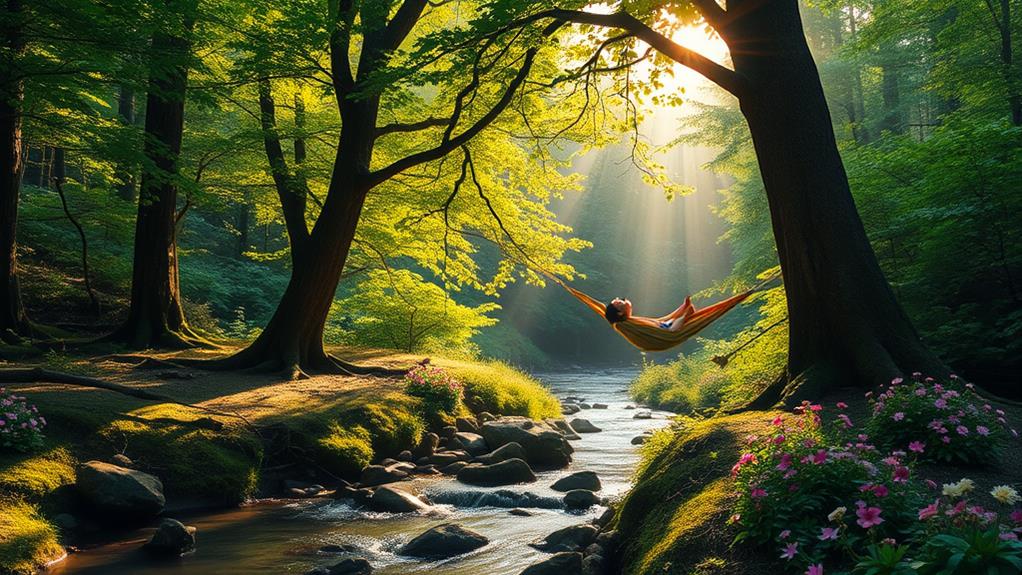
Deep breathing exercises are a great starting point for relieving stress, but mindful visualization techniques can enhance relaxation by engaging your mind more deeply. By visualizing calm scenes, you help create a mental escape from stress. Picture yourself by a calm lake, feeling a gentle breeze on your skin, or walking through a lush forest, where each step lightens your worries. These visualization methods not only help reduce stress but also enhance creativity, improve focus, and support emotional health.
Incorporating these quick meditation techniques into your daily routine can bring about inner peace and ease anxiety. You’re not alone in this journey—guided visualization meditations are available to help you find positive images and achieve relaxation. Adding these practices to your everyday routine gives you moments of calm in the middle of chaos.
| Setting | Feeling | Result |
|---|---|---|
| Peaceful Shore | Serenity | Stress Relief |
| Summit | Empowerment | Inner Peace |
| Blossom Garden | Happiness | Reduced Anxiety |
| Warm Retreat | Comfort | Emotional Well-being |
Using these mindful visualization techniques can turn daily stress into peaceful experiences, benefiting not only you but also those around you by fostering a more calm and balanced presence.
Handle stress spikes using the box breathing & 4-7-8 techniques guide — calm physiology first.
Effective Body Scan Practices
Engaging in body scan meditation helps you concentrate on each part of your body, which can lead to relaxation and increased mindfulness. By paying attention to different areas, you become more aware of any tension or discomfort you might be feeling. This awareness is important because it allows you to address these stresses, promoting a sense of calm and well-being. For those who focus on helping others, understanding your own stress can make you more empathetic, as it helps you connect with others’ experiences.
To start a body scan, find a quiet place where you can relax without being disturbed. Whether you choose to lie down or sit comfortably, begin by closing your eyes and taking several deep breaths. Focus your attention at the top of your head, then gradually move your attention down to your toes. As you mentally check each body part, notice any muscle tension or discomfort. With each exhale, imagine letting go of that tension, helping your body to relax more. This practice not only helps reduce physical stress but also improves mental clarity.
Regular body scan meditation sessions can improve your sleep quality and lower anxiety levels. By dedicating time to yourself, you become better equipped to support and serve others, contributing to a healthier community.
Incorporating Meditation Into Daily Life
To easily include meditation in your daily life, start by understanding its positive effects. Meditation not only refreshes your mind and body but also improves your emotional health. Simple exercises like deep breathing can significantly reduce stress, enhancing focus and mental wellness.
Set aside a few minutes each day for meditation, even if your schedule is busy. These peaceful moments can help you feel calm and relaxed, allowing you to tackle daily challenges with a clear mind. If you want to help others, taking care of your emotional health is crucial. Meditation helps you become more aware of yourself, making your interactions more present and understanding.
Try adding meditation to your morning routine or take a short break during the day to recharge. The convenience of quick meditation techniques is that you can do them anytime, anywhere. Imagine how less stress and more mental clarity can improve your ability to help others. By focusing on your mental health and emotional well-being, you’re better prepared to have a positive influence on those around you.
Frequently Asked Questions
How to Destress in 1 Minute?
To destress in 1 minute, try inhaling exercises or visualization techniques. Hug mindful moments and a body scan for quick mindfulness. Activate your relaxation response using grounding techniques, achieving instant calm and stress relief with a peaceful pause.
How to Mediate in 5 Minutes?
In just 5 minutes, you can meditate by practicing deep inhaling, a mindful pause, or a body scan. Try grounding exercises, visual imagery, or mantra repetition. Incorporate gratitude reflection, sensory awareness, progressive relaxation, or guided visualization for tranquility.
How to Do a 1 Minute Meditation?
To do a 1-minute meditation, practice focused inhaling exercises and engage in mindful presence. Use grounding techniques like a body scan or visualization meditation for instant calm. This mini relaxation promotes one-minute mindfulness, quick centering, and stress reduction.
How to Relax in 5 Minutes?
To relax in 5 minutes, start with deep respiration. Use a body scan or progressive relaxation. Try visualization techniques or guided imagery. Practice gratitude or mantra meditation. Engage in mindful strolling. Embrace compassion and sensory grounding.
Conclusion
By embracing these quick meditation techniques, you’ll find yourself more equipped to handle daily stressors with grace and calm. Breathing exercises, visualization, and body scans are tools you can use anytime, helping you cultivate a more peaceful mind and balanced life. Make meditation a regular habit by weaving it into your daily routine, and watch as your inner peace flourishes. Remember, each small step you take in your meditation exploration is a powerful stride toward personal growth and well-being.